







Faculty of International Studies
国際学部ニュース詳細
更新日:2026年11月05日
学生の活動
【国際学部】学生広報委員による国際交流センターのホスキンズ先生へのインタビュー(English ver.)
国際交流センターのホスキンズ先生に、学生広報委員のビシャーラ アルアトキヤーさん(国際学部2年)が英語でインタビューを行いましたので、その模様をお届けします!
◆◇◆◇◆◇◆◇◆◇◆◇◆◇◆◇◆◇◆◇◆◇◆◇◆◇◆◇◆◇◆◇◆◇◆◇◆◇◆◇
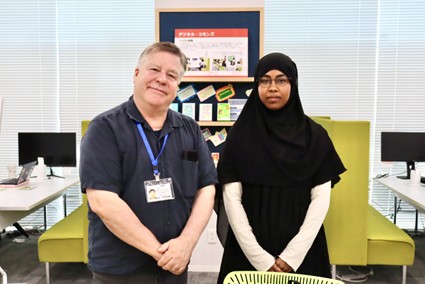
Q: Could you introduce yourself, please?
A: Well, my name is Christopher Hoskins, and I’ve been working at this university for 13 or 14 years. Most of that time, I worked in the Department of Arts and Letters, although I’m not a literature person. I’m more interested in linguistics. My specialty has always been teaching foreign languages and teaching English as a foreign or second language.
The department offers some courses for students who want to become teachers of English in Japan. That’s how I was hired. However, I ended up teaching a wide variety of courses.
Q: How long have you been in Japan?
A: I came to Japan in 1985, so I’ve been here for 41 years. I obviously love working here. Before coming to this university, I worked at several institutions across Japan. My career includes time at International Christian University (ICU) in Mitaka, Akita International University, and Miyazaki International University. I also worked from 1988 to 1998 at the Niigata campus (in Nakajo-machi, now Tainai City) of my alma mater, Southern Illinois University (SIU), where I earned both my bachelor's and master's degrees in applied Linguistics. So, I’ve had the chance to teach in various places all over the country.
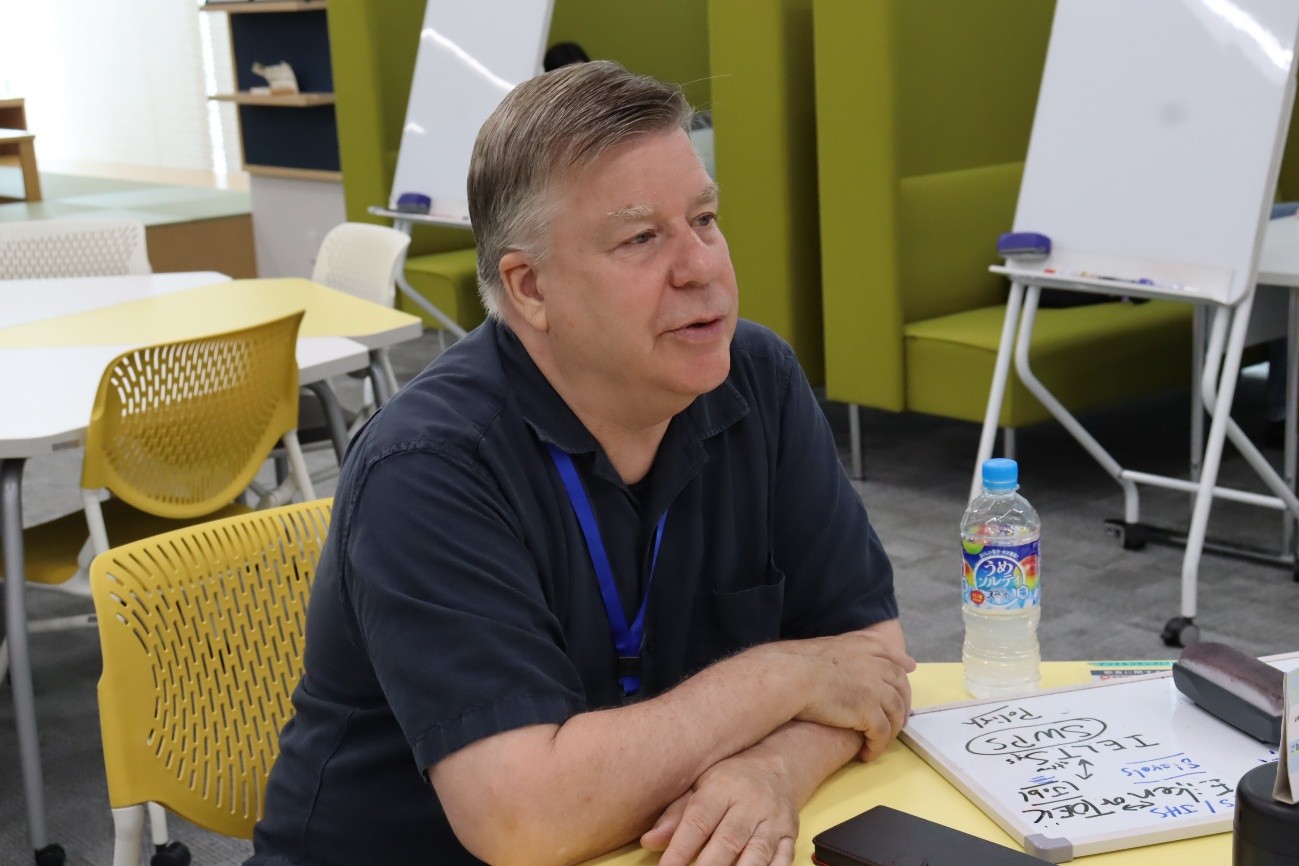
Q: What classes do you teach at this university?
A: Now I teach fewer classes because I’m also working with the Center for International Studies here at Kyoritsu, so teaching is not my full-time job.
Currently, I teach English Composition, which is a two-term course. We start with shorter pieces of writing and gradually move on to longer ones. We work on academic writing, using sources, citations, and things like that.
I also teach English Presentation Skills, English Discussion Skills, and an English teaching methodology class for students who want to become English teachers. That class focuses more on linguistics and teaching methodology. I also teach a class on American history and culture.
Q: What are your hobbies or favorite things to do in your free time?
A: One of my favorite hobbies is playing the violin. I play with other people in various music groups, and that’s a lot of fun for me. I’ve made many friends through music.
I also have many opportunities to go to different places around the area, meet people, attend events, and play music.
I played music last night at a charity event in Harajuku. The theme was playing ukuleles and Hawaiian music. There were about 12 small groups of people playing music. I join this event every two or three months, and the purpose is to raise money to help people who have lost their homes because of tsunamis, landslides, and other disasters.
I’ve been playing music since I was a child. I started playing the violin, I think, in junior high school.
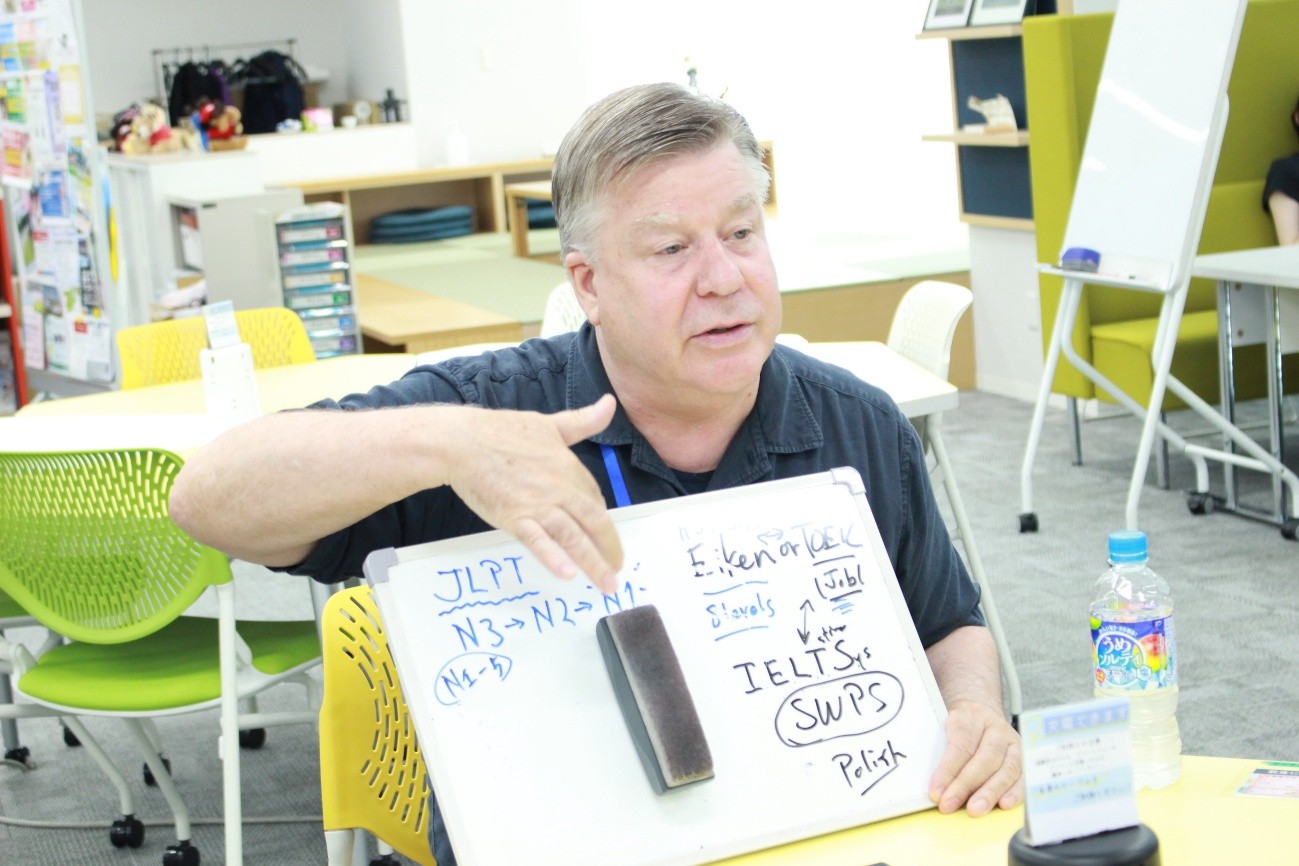
Q: What do you do to make the Talk Room enjoyable and comfortable for students?
A: In order to make it more natural and enjoyable, I usually don’t plan the Talk Room like a formal lesson. It’s not really an English lesson. It’s more unstructured and freer.
I usually have some questions in mind that I might want to ask, but I allow the conversation to go in various directions. When students talk about something, what they say often brings up new questions.
So, it’s more like a natural conversation. If we were having a conversation, for example, the things you said would make me think of questions. I might say, “Oh, where did you do that?” or “How did you start doing that?” That’s kind of what we’re doing right now.
Creating a relaxed atmosphere and making the conversation feel free and low-pressure are important. I also encourage every student to participate and make sure that everyone has a chance to speak, regardless of their level.
Some people have a lot of experience speaking English, so they can say more and follow the conversation more easily. That’s okay. Some students have less experience, and that’s okay, too. We include everybody.
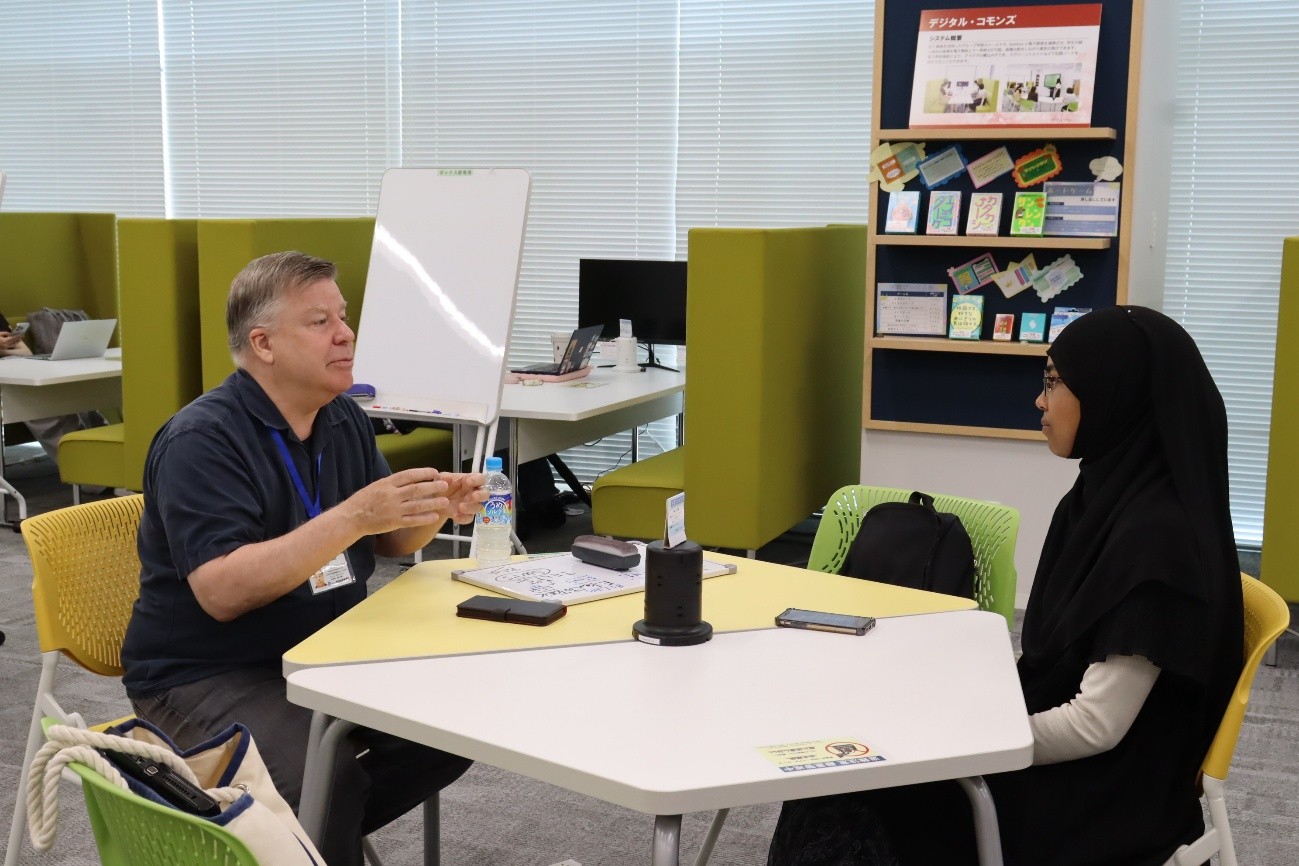
Q: How can someone who can’t speak English communicate with native speakers?
A: It comes down to experience. It’s not so different from playing sports. Right now, we’re watching the FIFA World Cup. If you want to become very good at playing football, you need opportunities to play. The more experience you have, the better you become.
So, experience is very, very important. Another important thing is exposure—taking in information in English.
It can be very helpful to watch television dramas or movies that you enjoy, or listen to English-language songs that you like. That kind of exposure can help you learn, too.
I have a few friends here in Japan who are around my age. At least one of my good friends speaks English quite fluently. He said that he learned English by listening to songs by the Beatles in the 1960s.
He loved those songs so much that he memorized the lyrics. The lyrics contained sentence structures that he could remember, and he could replace words in those sentences to make new ones. He said that listening to Beatles records all the time as a teenager helped him a lot.
So, music is great. Movies and television dramas that you enjoy can be helpful, too. Unlike music, when we watch a movie or a drama, we can see people’s faces and understand the situation. There is a lot more information available to us, which makes it easier to understand what people are saying.
So, that kind of listening and viewing practice can be very helpful.
Q: Finally, would you like to give a message to the students?
A: Don’t worry about making mistakes. Everybody makes mistakes. I make mistakes when I’m speaking English all the time. I say crazy things sometimes, and when I’m speaking Japanese, I sometimes say things that are just crazy, too. But people understand me.
We can understand each other, and the point is not to make perfect sentences. The point is to communicate with one another.
So, don’t worry about mistakes. If your pronunciation is a little funny, or you choose an unusual word, or your grammar is a little off, don’t worry about it. It’s okay.
With more experience, we gradually improve our word choice, pronunciation, and grammar. But that just takes time and experience.
Thank you very much for your time. That concludes our interview.